Common Wheel Throwing Mistakes and How to Fix Them
Every potter remembers their first time sitting at a wheel. The clay spins, you lean in with confidence, and within about thirty seconds the whole thing has collapsed into a lopsided wobble. If that sounds familiar, you are in very good company. Wheel throwing is one of those skills that looks deceptively simple when someone experienced does it, and then feels completely impossible the moment you try it yourself. The good news is that almost every mistake beginners make is predictable, fixable, and – once you understand what is actually going wrong – surprisingly easy to correct.
This guide walks through the most common problems that new throwers encounter, explains why they happen, and gives you practical ways to sort them out. Whether you are taking classes at a local studio, working with a community wheel at a place like Turning Earth in London or Manchester Craft and Design Centre, or you have just invested in your own wheel at home, these fixes will save you a lot of frustration and a great deal of clay.
The Clay Is Not Properly Centred – and Everything Goes Wrong From There
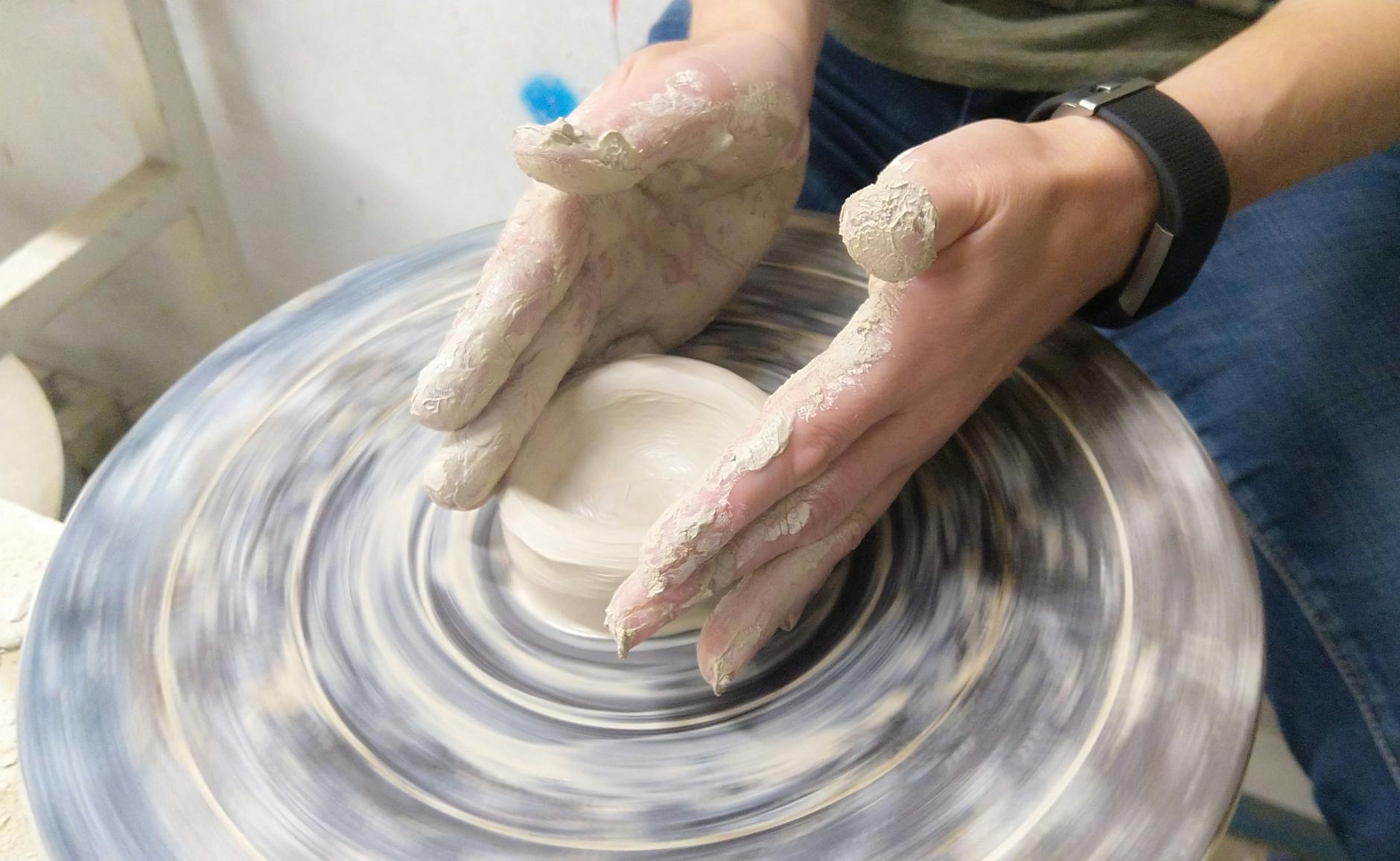
Centring is the foundation of everything in wheel throwing, and it is also where most beginners struggle longest. If your clay is not centred before you start opening and pulling, the walls of your pot will be uneven, the base will be thick on one side and thin on the other, and the whole form will wobble as it dries. No amount of skill later in the process can compensate for poorly centred clay.
The most common reason beginners cannot centre is that they are fighting the clay with their hands alone instead of using their whole body. Your arms should be braced against your thighs or the edge of the wheel tray, creating a rigid frame. If your elbows are floating in the air, you are relying entirely on arm strength, and the clay will keep pushing back and winning. Sit close to the wheel, lean forward slightly, and lock those elbows down. You will immediately feel how much more controlled the pressure becomes.
Another centring problem is using too little water. Clay needs to be lubricated so your hands can slide over it without dragging. That said, too much water is also a problem – it weakens the clay over time and makes the walls go floppy. Use just enough to keep things slippery, and try to work efficiently so you are not constantly rewetting.
If you are really struggling with centring, try this: start with a smaller amount of clay than you think you need. Beginners often start with 1-1.5kg, which is actually quite challenging to centre. Drop down to 500g or even 400g, get comfortable with the feeling of clay behaving itself under your hands, and build up gradually from there.
Walls That Are Too Thick at the Bottom
This one catches nearly everyone out. You open the base, you pull up the walls, the pot looks reasonable – and then you cut it off the bat and find the bottom is 2cm thick and heavy as a brick. A finished pot should generally have a base around 6-8mm thick, depending on size. Much more than that and the piece will take forever to dry and may crack in the kiln.
The issue usually comes from not compressing the base properly when you open. When you push your fingers down to open the clay, you need to compress that base floor firmly – press down and outward with a smooth, deliberate movement, not a timid poke. Many beginners open up a hole but leave a thick, uneven pad of clay underneath.
A useful tool here is a wooden or metal rib. After opening, use a rib pressed flat against the base while the wheel spins to compress and even out that floor. It removes excess clay, eliminates any spiral grooves from your fingernails, and gives you a clean, consistent surface to work from. Potclays and Scarva Pottery Supplies both stock a good range of ribs suitable for beginners, and they are not expensive.
Get into the habit of checking your base thickness regularly. A wooden needle tool or a purpose-made thickness gauge pushed straight down through the base tells you exactly how much clay you are working with. Do this check before you start pulling walls, not after.
Walls That Collapse or Wobble When Pulling Up
You start pulling up the walls and everything is going well, then suddenly the clay lurches to one side or folds over entirely. This is one of the most demoralising moments in wheel throwing, and it happens for a few different reasons.
The most frequent cause is pulling up too quickly or with too much force. The walls of a thrown pot are built up gradually through several passes – you are not trying to get full height in one pull. Each pull should thin the walls slightly and raise them a little. If you grab hard and yank upward, the clay cannot keep up and it buckles. Slow, steady pressure, coordinating both hands – one inside and one outside – is what creates even walls.
Another cause is uneven pressure between your inside and outside hands. If your outer hand is pressing in harder than your inner hand is pressing out (or vice versa), the wall will develop a thick and thin side, which eventually causes a lean or a collapse. Think of your hands as working together rather than one leading and one following. The inside hand lifts and supports; the outside hand shapes and guides.
Wobbling walls that do not fully collapse are often a centring problem that has carried through. If the base was not perfectly centred, the walls will have a slight off-centre rotation that becomes more obvious as they get taller and thinner. The fix here is to go back to centring practice rather than trying to chase the wobble once the walls are up.
The Rim Keeps Going Uneven
An uneven rim is partly cosmetic and partly structural – a wobbly rim is a weak point that can crack during drying and firing. It is also very difficult to attach a lid to, if that is what you are making. Getting a consistent, level rim takes time and practice, but there are specific things you can do to improve it.
First, avoid pressing too hard on the rim with your fingers during the pulling process. A light, consistent squeeze is better than gripping. Keep the wheel speed reasonably fast when pulling walls – slower speeds can cause more uneven pressure.
Second, learn to collar in. Collaring means using both hands gently around the outside of your cylinder to narrow it slightly and consolidate the rim. It is a useful technique for evening things out and strengthening the top of the form.
If your rim has genuinely gone very uneven – one side noticeably higher than the other – the most effective fix is to trim it level using a needle tool. Hold the needle tool steady at the height of the lowest point of the rim while the wheel spins slowly. The clay will cut against it and the uneven section will simply fall away, leaving a level rim. It feels a bit alarming the first time, but it works perfectly.
The Pot Comes Off the Wheel Bat in the Wrong Shape
Many beginners finish their pot, wire it off the wheel, and then discover it has distorted significantly during removal. This usually means the base was too thin, the clay was too wet and soft, or the piece was not left to firm up enough before removal. Ideally, freshly thrown pieces benefit from a few minutes of rest before you wire and remove them. If the clay still feels very soft and floppy, give it more time.
If you are throwing directly onto the wheel head rather than a bat, invest in some bats. Throwing onto bats – wooden, plastic, or plaster – means you can lift the entire piece off the wheel without touching it at all. You simply leave it on the bat to stiffen slightly before handling. Most UK pottery suppliers sell sets of plastic bats at reasonable prices, and they are genuinely worth it for beginners who are still building up confidence in handling soft clay.
S-Cracks in the Base
You open the kiln after your first firing and find your pot has developed an S-shaped crack across the base. This is a specific type of crack called – fittingly – an S-crack, and it happens when the base and the walls of a pot are pulling in different directions as they dry and shrink. It is caused at the throwing stage, not the drying or firing stage, so catching it early matters.
S-cracks develop when the base has not been properly compressed and the clay particles are not aligned uniformly. The fix is to compress the base thoroughly after opening – use a rib, use your fingers, use a sponge pressed flat against it. Do this several times during throwing, not just once. Some potters also find that using a slightly stiffer clay body reduces the likelihood of S-cracks, so if you are buying clay in the UK and this is an ongoing problem, ask your supplier about a grogged or slightly coarser clay. Valentines Clay Products and IMERYS both supply a range of clay bodies through UK distributors, and the staff at most good pottery suppliers will advise you on which is most forgiving for beginners.
Clay That Feels Impossible to Work With
Sometimes it is not your technique – it is your clay. Reclaimed clay that has not been properly wedged, clay that is too dry in patches, or clay that has gone too soft from excess water will fight you at every stage. Wedging your clay thoroughly before throwing is not optional. It removes air bubbles (which can cause pieces to explode in the kiln) and creates a consistent texture throughout the lump.
There are two main wedging methods: ram’s head wedging and spiral (or ox-head) wedging. Spiral wedging is considered more effective at
removing air pockets and aligns the clay particles in a consistent direction, which helps on the wheel. It takes longer to learn than ram’s head, but most potters who persist with it find it becomes second nature. Aim for at least twenty to thirty full rotations when wedging, and keep your workspace at a comfortable height so you can put your body weight into the movement rather than relying solely on your arms.
If your clay is too soft, spread it on a plaster bat or an absorbent surface for ten to fifteen minutes before you begin. If it is too stiff, work small amounts of water in gradually by hand, or wrap the clay tightly in a damp cloth and leave it overnight. Trying to force either extreme onto the wheel wastes time and builds frustration. Good throwing begins well before you sit down at the wheel — it begins the moment you assess and prepare your clay.
Clay consistency is also worth considering when you purchase or reclaim material. Different clay bodies behave differently; a grogged stoneware will tolerate rougher handling than a fine porcelain, and understanding the temperament of the clay you are working with helps you adjust your expectations and your technique accordingly. Keep notes if you find something that works, especially when mixing reclaimed clay with fresh.
Conclusion
Wheel throwing is an unforgiving craft in the sense that it makes every mistake immediately visible, but that directness is also what makes it such an effective teacher. Centring problems, collapsing walls, uneven rims, and difficult clay are not signs of failure — they are the ordinary working conditions of learning. Each session at the wheel builds muscle memory and spatial awareness that no amount of reading can replace. Return to the fundamentals regularly, slow down when something goes wrong rather than pushing through, and treat every flawed pot as useful information rather than wasted effort. Progress in throwing is rarely dramatic, but it is steady, and it compounds.