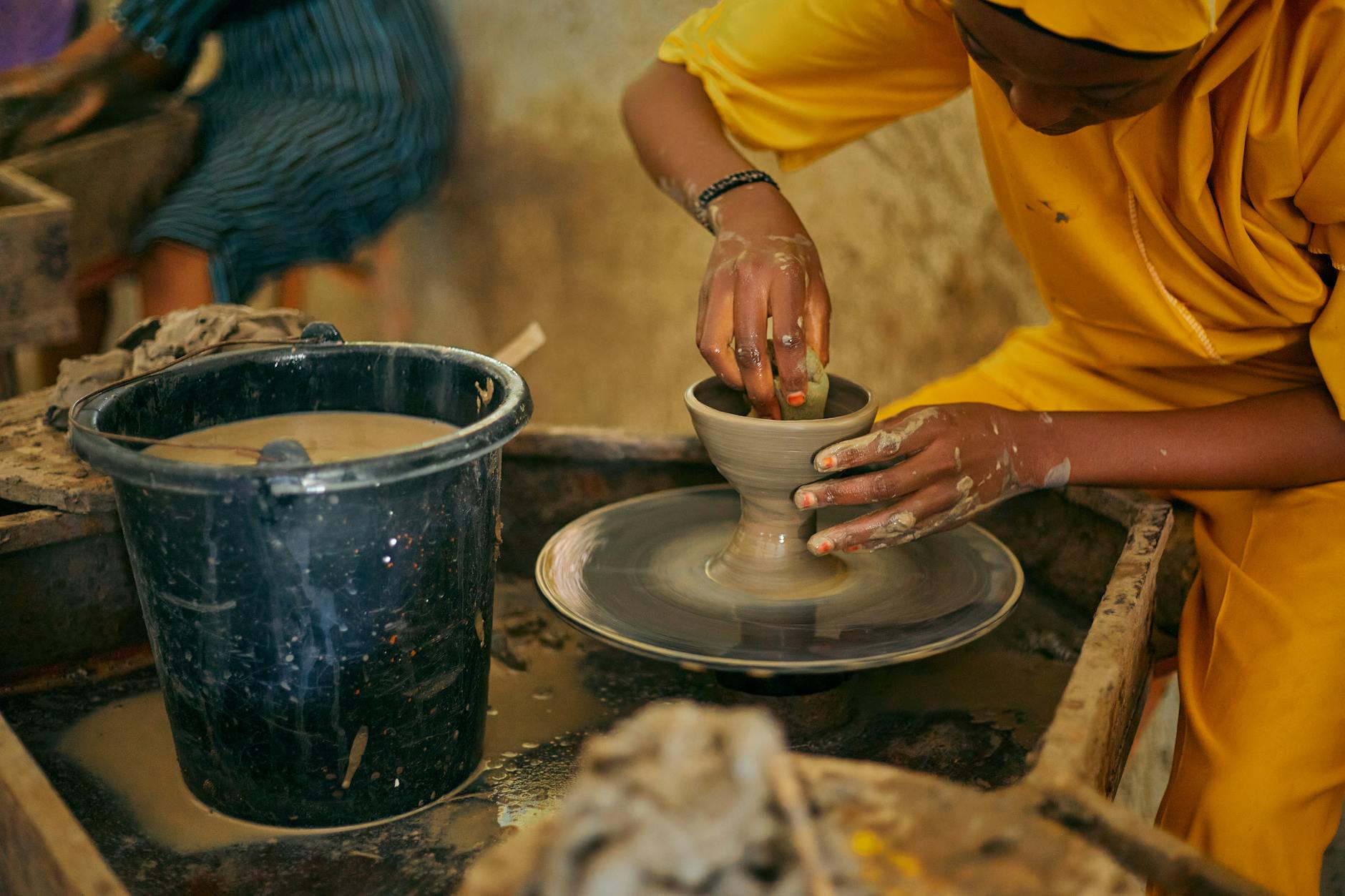
How to Make Pottery Jewellery
Pottery jewellery sits at a wonderful crossroads between two ancient crafts: ceramics and adornment. People have been wearing clay beads, pendants, and decorative pieces for thousands of years, and today it is one of the most accessible and rewarding areas of hand building you can try. Whether you are working at a kitchen table in Glasgow, a spare room in Cardiff, or a shared studio in Bristol, making jewellery from clay does not require a great deal of space, specialist equipment, or prior experience. What it does require is a little patience, a willingness to experiment, and an understanding of a few core principles.
This guide is written for complete beginners. If you have never touched clay before, that is absolutely fine. By the time you finish reading, you will have a clear picture of the materials you need, the techniques involved, and how to finish your pieces so that they look genuinely beautiful and are safe to wear.
Why Pottery Jewellery?
Before getting into the practical steps, it is worth pausing to think about what makes clay such a compelling choice for jewellery making. Unlike metal or resin, clay is forgiving. You can reshape it, blend it, texture it, and start again without wasting much material or money. The finished results can range from rustic and earthy to sleek and contemporary, depending on the clay body you choose and the glazes or finishes you apply.
Pottery jewellery has also seen a genuine surge in popularity across the UK in recent years. Independent makers sell through platforms like Not On The High Street, at markets such as the Crafts Council’s Collect fair in London, and through their own studios and social media pages. There is a real appetite for handmade, tactile pieces that feel personal and unique. Learning to make your own means you can create pieces that reflect your own taste, give truly one-of-a-kind gifts, or even begin a small creative business over time.
Choosing the Right Clay
Not all clay is suitable for jewellery making, and choosing the right type from the start will save you a great deal of frustration. The main options available to beginners in the UK are earthenware, stoneware, and polymer clay. Air-dry clay is also widely available, but it is not technically ceramics since it does not require firing, and it is less durable for wearable pieces.
For genuine fired pottery jewellery, white earthenware and porcelain are the most popular choices among UK makers. White earthenware is affordable, smooth, and easy to work with, making it ideal for beginners. Porcelain is finer and more translucent, which can produce stunning results, but it is more prone to cracking and warping during drying and firing. Many beginners find it worth starting with earthenware and progressing to porcelain once they have built some confidence.
Reputable UK clay suppliers include Valentine Clays in Stoke-on-Trent, which is the heart of British ceramics and home to the famous Potteries. Scarva Pottery Supplies in Northern Ireland and CTM Potters Supplies in the Midlands are also well regarded. Most will sell clay in 12.5kg bags, which is more than enough to get started and to make plenty of mistakes along the way.
Essential Tools and Materials
One of the great advantages of hand building jewellery is that you do not need a pottery wheel or a large studio. Your toolkit can be modest, and many items can be found around the house or purchased inexpensively.
- Clay body: White earthenware or porcelain, around 1-2kg to start.
- Rolling pin and guides: Two wooden dowels of equal thickness (around 3-5mm) placed either side of your clay will help you roll an even slab. A smooth glass rolling pin from a kitchen shop works well.
- Cutting tools: A craft knife or clay cutting blade for clean edges. Cookie cutters or homemade card templates for consistent shapes.
- Needle tool or skewer: For piercing holes for cords, jump rings, or ear wires before firing.
- Texture tools: Lace, leaves, stamps, or textured rollers. Alphabet stamps are particularly popular for personalised pieces.
- Slip: Clay mixed with water to a thick cream consistency, used to join pieces together.
- Sandpaper: Fine-grit (400 and 600) for smoothing edges on dried, unfired clay (greenware) and after bisque firing.
- Underglazes and glazes: For colour and protection. Amaco and Spectrum are widely available through UK suppliers.
- Jewellery findings: Ear wires, jump rings, bail connectors, and cord. Beads and Crafts and Cooksongold both stock a good range in the UK.
Understanding the Firing Process
If you do not own a kiln, this might seem like a significant barrier. In reality, it is less of an obstacle than you think. Many UK pottery studios and community ceramics spaces offer kiln hire or fire members’ work for a small fee. Organisations such as the Craft Pottery Hobby Association can help you find a local studio or community kiln. Universities and adult education colleges often have ceramics facilities open to the public through evening or weekend classes.
Clay that has been fired once is called bisqueware. At this stage it is porous and ready to be glazed. After a second glaze firing, the surface becomes smooth, glass-like, and durable. For jewellery, this two-stage process is standard, though some makers use underglazes applied before bisque firing, which can give particularly rich, matte results.
If kiln access genuinely proves difficult, oven-bake polymer clay (such as Fimo or Sculpey, both readily available at UK craft shops including Hobbycraft) is a practical alternative for beginners. It is not traditional pottery, but it allows you to practise shaping, texturing, and finishing skills before investing in clay and kiln time.
Step-by-Step: Making a Simple Ceramic Pendant
This is a great starting project. It teaches you the fundamentals of slab building, piercing, drying, and finishing, and the result is something you can actually wear.
- Prepare your clay. Wedge your clay thoroughly to remove air bubbles. This is simply a process of pushing, folding, and pressing the clay against a flat surface, similar to kneading bread dough, for about five minutes. Air bubbles can cause pieces to crack or even explode in the kiln, so this step matters.
- Roll your slab. Place your clay between two equal-thickness guides and roll it out to an even thickness of around 4-5mm. For small jewellery pieces, this is a good working thickness – thin enough to look delicate, thick enough to survive handling.
- Cut your shape. Use a cookie cutter, craft knife, or template to cut your pendant shape. Simple geometric shapes – circles, ovals, hexagons – work beautifully and are forgiving for beginners. Press firmly and cleanly, then lift the surrounding clay away.
- Add texture (optional). While the clay is still soft, press a piece of lace, a leaf, or a rubber stamp into the surface. Lift it straight away to reveal the impression. Work quickly but calmly – you have more time than you think.
- Pierce your hole. Use a needle tool or skewer to make a hole approximately 5mm from the top edge of your pendant. Make the hole slightly larger than you think you need, as clay shrinks by around 10-12% during firing. A hole that is too small after firing cannot be enlarged without risking breakage.
- Smooth the edges. Run a damp finger lightly around the edges to soften any sharp cuts. Do not use too much water – it weakens the clay.
- Dry slowly. Place your pendant on a flat, non-porous surface such as a piece of plasterboard or a damp cloth, and allow it to dry slowly at room temperature. Avoid placing it near a radiator or in direct sunlight, as rapid drying causes cracking. Small pieces like pendants may take 24-48 hours to reach the leather-hard stage, and 3-5 days to become fully dry (bone dry).
- Sand when dry. Once bone dry, lightly sand the edges with 400-grit sandpaper to smooth any roughness. Wipe away the dust with a barely damp cloth.
- Bisque fire. Take your pieces to your chosen kiln space. Earthenware is typically bisque fired to around 1000°C. After firing, your piece will be pale, slightly chalky-looking, and much more robust.
- Apply underglaze or glaze. Use a brush to apply underglaze colours to your bisqued piece. Allow each layer to dry before adding the next. Finish with a clear glaze over the top if you want a glossy surface. Leave a small margin around the hole clear of glaze to prevent the hole sealing over.
- Glaze fire. Fire again to the appropriate temperature for your glaze. Always follow the glaze manufacturer’s guidelines.
- Attach your findings. Once cooled, thread a jump ring through the hole and attach an ear wire, bail, or cord to complete your jewellery piece.
Making Ceramic Earrings
Earrings follow exactly the same slab-building process as pendants, with one additional consideration: they need to be lightweight. Clay earrings that are too thick and heavy will be uncomfortable to wear and may even cause ear pain or damage to pierced ears over time. Aim for a finished thickness of no more than 3-4mm, and keep shapes small – no larger than around 3-4cm in their longest dimension.
Matching pairs are a satisfying challenge. Roll your slab, cut two shapes using the same cutter, and texture them simultaneously using the same stamp or impression. Even so, hand-built pieces will always have subtle variations, and this is part of their charm. Customers who seek out handmade jewellery actively value this individuality.
For stud earrings, you can press a stainless steel or titanium stud post into the back of the clay before it dries, using a small amount of strong epoxy adhesive after firing to secure it permanently. Do not fire metal findings in the kiln – they will melt or react badly with the clay and glaze.

https://shorturl.fm/gJsZz
https://shorturl.fm/WKzr2
https://shorturl.fm/shMqB
https://shorturl.fm/W25EN
Популярные песни 2026 скачать бесплатно https://shorturl.fm/dfuzp
https://shorturl.fm/IDGic
https://shorturl.fm/QwgMR
https://shorturl.fm/cX82I
https://is.gd/2esl83
https://shorturl.fm/MQDlR
https://shorturl.fm/Zhppg
https://shorturl.fm/Q7WHK
https://shorturl.fm/97NpP
https://shorturl.fm/aup5s
https://shorturl.fm/w8kGo
https://shorturl.fm/H46QC
https://shorturl.fm/4ooUW
https://shorturl.fm/rgHhg
https://shorturl.fm/Rf7gi
https://shorturl.fm/fANs4
https://shorturl.fm/uMAiv
https://shorturl.fm/3WTF0
https://shorturl.fm/RjRb7
https://shorturl.fm/oYxe3